

WEEKLY DISPATCH: Our Year (One) in Review
As we approach our very first birthday, it's time to reflect honestly on this crazy experiment called Drop Dead Generous. What's happened? What have we learnt? And is any of it actually working?

This article is the first ‘Weekly Dispatch’ - an editorialisation of our journey stewarding Drop Dead Generous, a social experiment giving 1,000 grants of $500USD to people around the world to pay-it-forward through an act of kindness. Subscribe at www.dropdeadgenerous.org to join the experiment. You’ll receive these shiny dispatches direct to your inbox, as well as a loving invitation to apply for a grant from our “$500 Do Something Drop Dead Generous Fund”. If you’re already a subscriber then please consider forwarding this onto 3 people who might want to be.
We’re all a bit giddy about our upcoming first birthday here at HQ. 13th November 2025 is the moment and it’s fast approaching. To date we’ve given grants to 227 people from 19 different countries, totalling $113,500, and so have a remaining $386,500 to give to 773 others throughout the year ahead.
Right now feels like the calm before the party poppers and the sugar highs, and a good moment to reflect on everything that’s happened so far. To review the events of this first year and to celebrate our grantees and their stories in the process. And, most importantly, to ask that vital, tricky and down right obvious question - is this crazy social experiment….. um….working?
Our Year (One) in Review
The Pilot
October 2024
We started with a pilot. This time last year, 30 people, many of whom we knew and trusted would be honest with feedback, were given $500 with a brief to do nothing other than something kind.
Some came back energised and with incredible stories. Julie Seal here in the UK, welcomed immigrants to her home town by creating a medieval gorilla art trial written in their 21 most spoken languages. Tom Kemmer, living over in Fargo, US, used his grant to pay for meals at a food truck that feeds vulnerable, low income families in the area. But his act galvanised the community to join in and within days, our $500 in his hands had turned into $7,090 and thousands, rather than hundreds, of meals were paid for.
Sure, there was something special going on and that was the good news. But also some things emerged that we needed to solve for. Many struggled with our lack of criteria. Some just paid forward the cash, which felt a little underwhelming. And a few got caught up in their fears. We realised the best responses were from those that felt most free to express themselves, so we designed our whole philosophy around this simple little insight - from the brand, application form and grantee support process through to the way we ourselves showed up. Then we launched.


Launch Day
13th November, 2024 (World Kindness Day)
We could have just launched our website and started taking grant applications, I guess. But we wanted to make a statement, not just to raise awareness for our “$500 Do Something Drop Dead Generous Fund”, but to attract the type of people who would express themselves freely.
To do this, we needed to be the proof of our own pudding and model the sort of philosophy we were feeling for, and there’s no better way to do this than with a big but silly idea. So we went to the press and told them that on World Kindness Day (the day we chose to launch), someone anonymous would be walking around London giving cash to anyone who was kind to them. Londoners, therefore, would have to spend the day seeking out ways to be kind to strangers in the hope they stumbled across our stranger and got filthy rich. Or at least a little bit rich.
Who knows how many Londoners gave and got kindness they wouldn’t have otherwise experienced that day, but it only took until 10am for our stranger to meet one of them, as a girl called Chloe walked up to him and helped him with directions - she had heard about our offer, decided to try and find us… and then did! Which was extraordinary in a city of 9 million people.
Sneakily, our stunt also got us in the papers, on the radio and all over social media, so by the end of the day we had our first 73 grant applications to review.
Our Very First ‘Idea Review Session’
15th November, 2025
Our grant application has about nine questions but only two of them really matter. The first of these asks applicants to spend a moment thinking about someone who could do with them being kind, and we ask them to share who they’re thinking about and why, to whatever level they’re comfortable with.
The second essentially asks what they would do with $500 that would blow their chosen recipient’s socks off and make them smile. The answers to both these questions are a joy to read.


As John (my co-founder on this project and the stand in ‘Stranger’ on launch day) and I reviewed these first 73 applications we realised how rare and revealing it is to intentionally spend time thinking about who needs our generosity, which is the purpose of that first question.
Answers varied from people thinking about themselves (something we still don’t discourage), to their family, friends, neighbours and anyone obviously with a close relationship to the applicant.
But answers also included looser connections. Friends of friends and people or whole communities not immediately related to our applicants, but whose challenges they were able to resonate with, sometimes through a shared experience such as cancer survival, job loss or even childhood, and always as answers that showed our incredible human ability to feel compassion for everyone and everything. In all, we wondered about the power of this question and this question alone. About the difference it would make to put aside a minute a day to think this way. Something I have done in my personal life since.
If the first question taught us about the art of compassion, the second question hinted at the seemingly limitless potential of creativity when it comes to acting upon it.
Nelson (Grantee #0029), a software engineer from Singapore, who had written about his local street cat community as an answer to our first question, explained that with $500 he would build and mount a cat food dispenser on the street these cats call home. Interesting, right? But there was more. “I’d film it and stream it LIVE on the internet”, he explained, noting that the audience would have to donate to the local street cat charity to trigger the food being dispensed. “Woah”, we said. This is the sort of creativity that can supercharge the perception and therefore potential of kindness. The sort of creativity unleashed by encouraging people to express themselves in the way we recognised was needed during our pilot. The sort of creativity that inspires others to realise anything is possible.
We knew immediately the privilege of our front row seats to the compassion and creativity shared in these applications, not to mention the joy we experienced as we funded 31 of them like we did that day, and would go on to experience 969 more times after it. Our original plan was to give away money and we were doing that. But we wondered if we could go one step further to share the experience we were having as we did it. So we set about giving away something else too. Something entirely unsexy - our process.
The Birth Of The Drop Dead Generous Cat(alyst)
Perhaps as a subconscious nod to Nelson and his street cats, over the coming weeks we short-listed 10 individuals from our initial pool of grantees and started to call them ‘Cats’, as short-form for ‘Catalysts’. The idea was to create a smaller experiment within the broader experiment of Drop Dead Generous, by sharing the process of giving our grant money away and observing what would happen as a result. We decided to do this by designing a 6 month program within which our ‘Cats’ would be given ‘Golden Tickets’ as a way to give grants on our behalf, and also receive a monthly budget to arrange and organise meet-ups with like minded people in their communities.


We had a hunch that sharing the grant giving process would be a win-win. We knew from our own experience about the inspiration and energy that came from grant giving, but we also wondered how the experiment might be catalysed by a team of volunteers around the world searching for and vetting suitable grantees, on the ground and within their own communities.
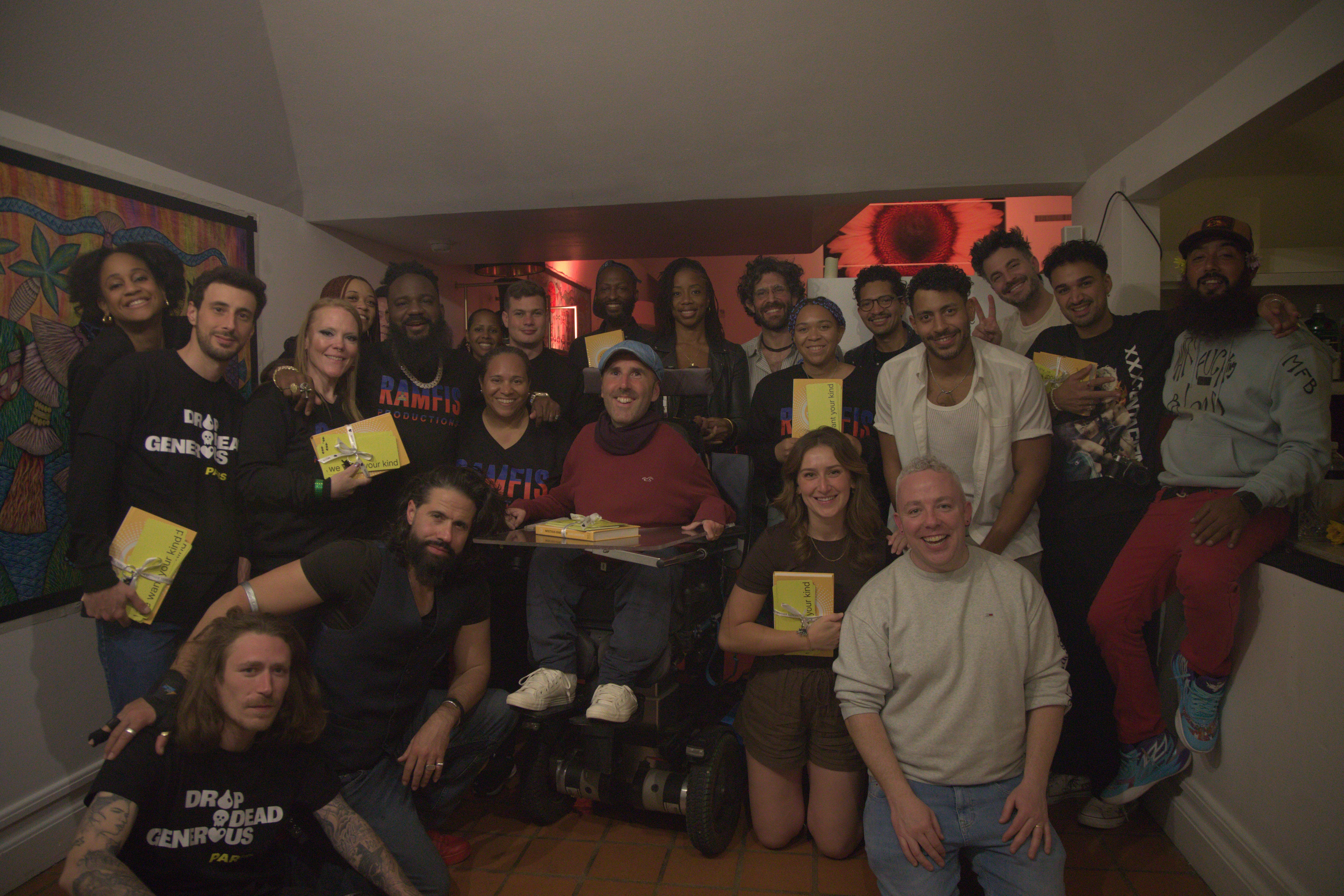
71 of our grants have now been given via ‘Golden Tickets’ from ‘Cats’, and they’re different from the rest, given as they are by grantees to grantees - laced with first hand experience and a whole lotta love for the spirit of this project.
Our First (and Second) ‘WOW’
Our first ‘WOW’ is directly related to our second, and both are a direct consequence of our Cat program and that leap of faith we took to give in more ways than money alone.
Marcelo Fleury is Grantee #0008 and when we first read his idea we didn’t quite realise where it would end up. A journalist and avid chess player from Porto Alegre, Brazil, he had heard about two chess prodigies living in a favela with their incredible mother but without the means to pursue their talents easily. Marcelo hired them a world renowned chess coach and covered their travel and entry fees for an upcoming international tournament. Despite competing against over 400 players from 20 countries, 17 year old Gabrieli and 8 year old Valentina both won in their respective categories. News articles followed, and a follow up crowdfunding campaign far exceeded our initial $500, which has since enabled them to enter and win yet more tournaments. Marcelo stood up for these girls and gave them a chance which they have since taken and run with - and now the whole of Brazil is behind them as they pick up pace and conquer their world.
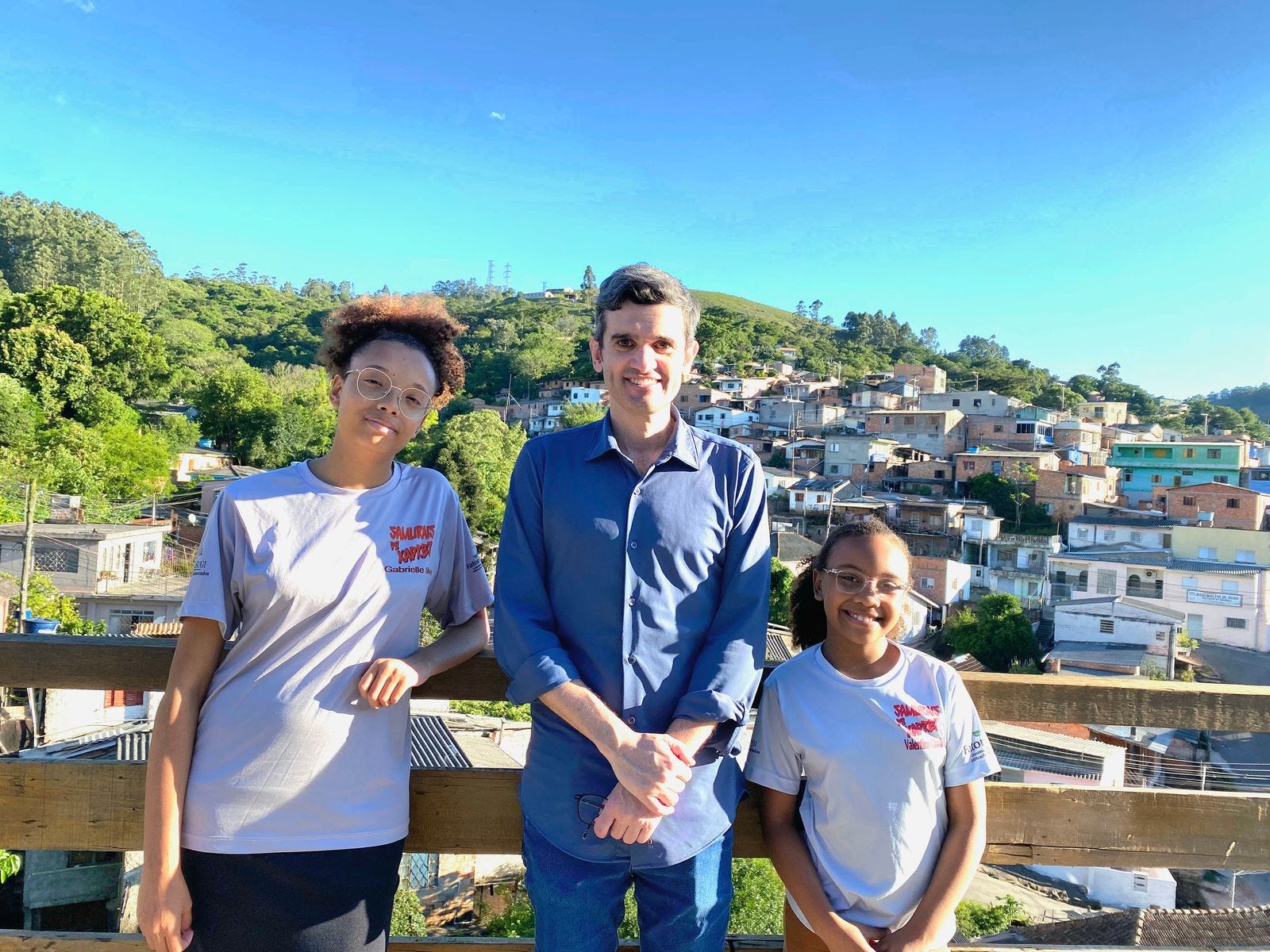
Marcelo had given us this first ‘WOW’, so we quickly turned him into a cat. Shortly after, ideas from Porto Alegre started rolling on in. Some were direct from Marcelo’s ‘Golden Tickets’, but many applicants only knew of the myth that was Marcelo, submitting their ideas as word of mouth reached them and momentum had built across this pocket of the world, 10,000kms from us in the UK.
Felipe (Grantee #0145) spread Mother’s Day love as an act of gratitude as he himself was about to become a parent. Talita (Grantee #0152) covered the cost of new teeth for a homeless friend, acknowledging his needs were greater than this, but noticing the shame he felt as he smiled, and realising that dignity could be restored with this small but important gesture.


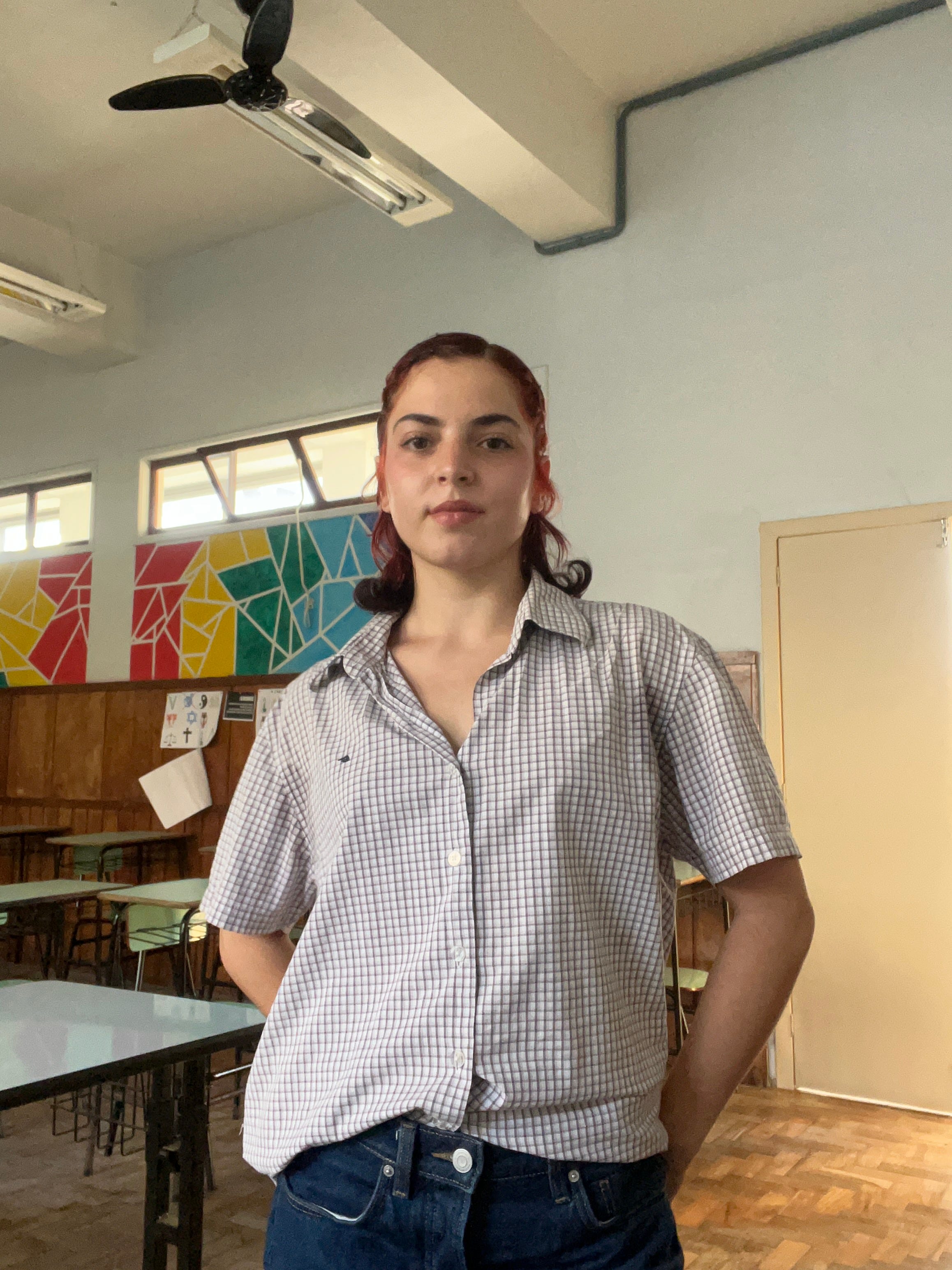
And then there’s Joana (Grantee #0148). Another of Marcelo’s ripple effects, she’s volunteering in a prison and using the $500 to buy the books needed to run a book club for 49 men incarcerated in one particular wing of the jail. But her idea doesn’t stop there. There’s a remission program offered to prisoners in Brazil and her intention is to sign as many of these 49 men up to it. Then, every time they read a piece of local literature and submit a report for a local library, they’ll get 4 days off their sentence. She then intends on using them as examples to encourage the 93% of prisons not yet offering this national program. Our $500 in her hands, looks set to result in thousands of days where men are rehabilitated and out of prison to be the fathers, husbands and friends those around them need them to be. This realisation was our second ‘WOW’. I’m still wow-ing as I write this, actually.
What’s been tricky about grant giving?
We’ve had over 900 applications and even though it might be surprising to have approved and given grants to as many as 25% of them, it’s also a reality that we’ve had to reject the majority. And a couple of them haven’t been best pleased.
In truth, we could do a better job at alleviating this disappointment. Our criteria is intentionally open in order to leave the door ajar for the most creative and original ideas out there. We’ve believed from the start that the more rules and guidance we place on our grant giving, the more inaccessible we become to ideas we would never even dream of. But over time we’ve developed a better sense of what makes a Drop Dead Generous idea and we’re yet to communicate this on our application form - something we’re working on and will implement next month.
Another challenge is that we also re-review past applications on a regular basis to see if we’ve missing anything we shouldn’t have, or if any ideas have become more pertinent as the project evolves. For example, in the run up to Mother’s Day this year we funded a handful of older applications for whom the recipients of their ideas were…. Mothers. But as an applicant, the outcome of this can be underwhelming. We inform unsuccessful applicants with the message “It’s not a no. It’s just a not yet”. Meh, right? There’s little closure this way so perhaps we’d be smarter and more respectful to simply say “It’s a no”.
The big issue, from a moral standpoint - and I sympathise with this - is for those who submit their ideas without success, but then feel hard done by once they have the context of hearing about ideas we have funded. Our first complaint was because of this. We had recently funded a few, quite frivolous ideas, yet had not funded this person’s very sincere and objectively worthwhile one.
As I think about our moral duty of what to fund vs what not to fund, I think mostly about the path we’re looking to take toward the most impact we can create. The easiest path, at least to a point of impact that’s more straightforward to measure, is not the one we are interested in taking. We are not a grant giving organisation looking at only the direct impact of what our grantees do - in which case, for example, we’d be morally obliged to skew our giving to countries where the money goes furthest.
The impact we’re curious about requires a more holistic view of how kindness actually happens and spreads. The ingredient that comes into play is the story of one person’s act, and not just the immediate outcome of the act itself. So when we review an idea we think very carefully about the story that will emerge from it. Will it encapsulate people or help them think in a different way about what others go through or what they can do about it for them? Frankly, is there a hook? Is the insight, idea or execution enlightening in some way? Or are they so obvious that they’ll just wash over people when they hear about them? And finally, is it original? Which is not necessarily to say has it ever been done before, but is it at least different from the hundreds of grants we’ve already given out?
Our moral duty is to steer this project as best we can by using our judgement with these nuanced considerations in mind. If and when we successfully set this precedence, then we will open our grant giving decision making up to our community and although it may be a way off, damn am I excited to do this - because this is another thing we can give away, so we should.
The $500,000 Answering Machine
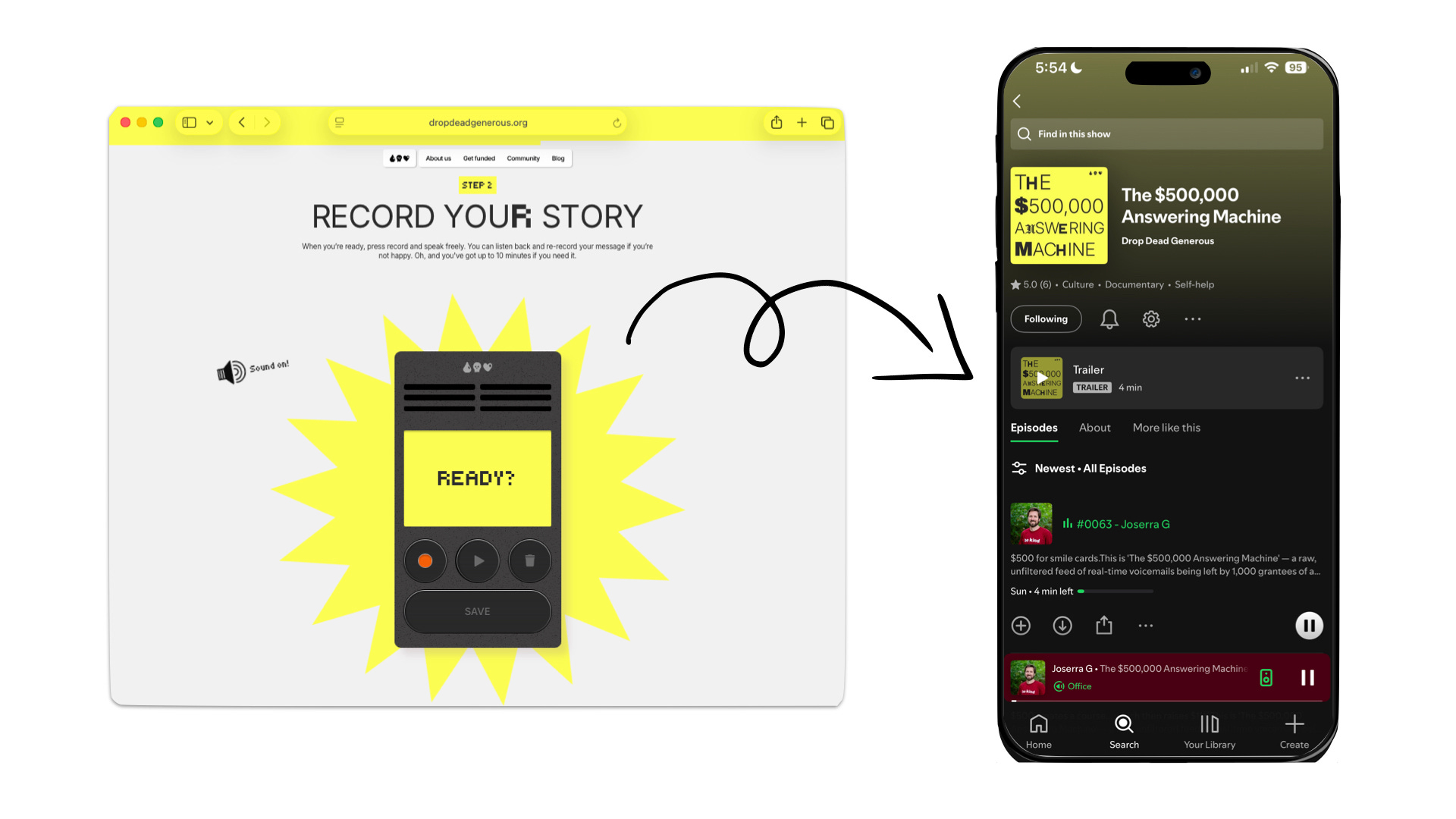
Our Grantee’s stories lie at the heart of this experiment’s success. Our focus this year has been to collect and tell them as they told. This is a baseline from which we can build upon through the next year and onwards. To do this, we’ve created a nostalgic method of story collection via the Drop Dead Generous answering machine, that only our Grantees have access to this. They’re invited, once they’ve completed their act of kindness, to “leave their story after the tone”. We nudge them to speak openly and honestly about what happened and how they felt about it. We try to encourage them into a mindset not of reporting back to us, but creating a gift for the world to listen to. We then post these stories in trust directly to a podcast feed, before we even listen to them. Totally untouched. Raw and real.
Beyond this baseline, there’s a million ways we could amplify these stories and the ideas, motivations and morals that sit within each and every one of them. We’re very lucky to have recently brought Meera Kumar into the fold, and together we’re working on formats and partnerships for the coming year to take this storytelling to the next level. All ideas are currently in play - documentaries, talks, card games and more.
So…. is this working?
The short answer is - we don’t know.
The scary answer is - we may never know.
In truth, we don’t even know what success will look like, let alone how much of it equates to the proof we need to say to anyone, most importantly ourselves, that this conclusively works.
How do you measure the impact of Marcelo’s support for Gabrieli and Valentina, and the ripple effects that followed this through Felipe, Talita, Joana? And if there is a way, then how do we duplicate this 1,000 times over? It might not be possible but are trying, and have recently formed a partnership with Prof. Robin Banerjee and the Centre for Research for Kindness at the University of Sussex to start studying our impact, if not to define and measure our success, then at least to unearth some academic learnings which we can build into the project and share with others.
We’ve also started spreading our wings beyond grant giving but within the spirit of Drop Dead Generous. Consider John’s recent 150 mile walk from Birmingham to London with Adam Lind, reliant totally on the kindness of strangers for food, company and accommodation. This content series reached 1,300,000 people with our message. Or our spin off project, Move Over Mother Theresa, where we’re cultivating the purpose-led Content Creator community with supper clubs, written features, and a podcast series that was recently chosen by Apple as ‘Best New Show’. Or even our travels, which just this year have taken us to Ahmedabad, Austin, Wyoming, Vancouver, Vienna - often speaking at and facilitating discussions between philanthropists, business leaders and social entrepreneurs on this superpower that lies within us all but right at the surface. Kindness. How do you measure that?
Our challenge is and always will be this two fold question. What is success and how is it measured? We have funding for two years and now one of them has been and gone. It’s likely that to secure more philanthropic funding we will have to find a measurement metric and make sure it measures up to their expectations. Or we find our own sustainability as a social enterprise that brings in more money than it gives away. Either way, every decision we’ve made up until now and will continue to make from now, is with the view that this is a 20, rather than a 2 year project. Because this is both our commitment and our best way to express ourselves freely in service of our vision for a world in which people give more than they take.
Lots of love,
Tom